
Next Level Ops Report: Guess Who’s Back, Exhibition Update, & Ski Season Chaos
Hi friends,
It's been a lifetime since we last spoke.... With projects and early season training and now a World Cup on the horizon, I've barely stopped to sleep. Even so, every day that goes by, every big win or challenge that we face in Ops, I think of you and double down on my resolve to put out an Ops Report, so you can all share in our journey here at the resort. So with the new T-bar opening next week and the World Cup days away and the grand opening of our new entertainment lounge (and oh yeah, daily operations), I thought it was the perfect time to put my pen to paper and give you a glimpse into the world of the organized chaos we call ski season.
TBAR THINGS
Where did we leave off with our story? Towers 10 & 11 and Schwendifest? The last time we spoke it was warm and breezy with winter on the horizon. Well, now it's full-on winter. And who doesn't love building a lift in the dead of winter, with temps in the balmy single digits and winds that blow ski racks down Oblivion? As Schultzy says, we don't have problems, we have challenges. And there is nothing more exhilarating than overcoming the challenges of hanging steel and wiring towers in freezing temps.
Concrete is the Worst, Part III: Ok, but when can we do this again???
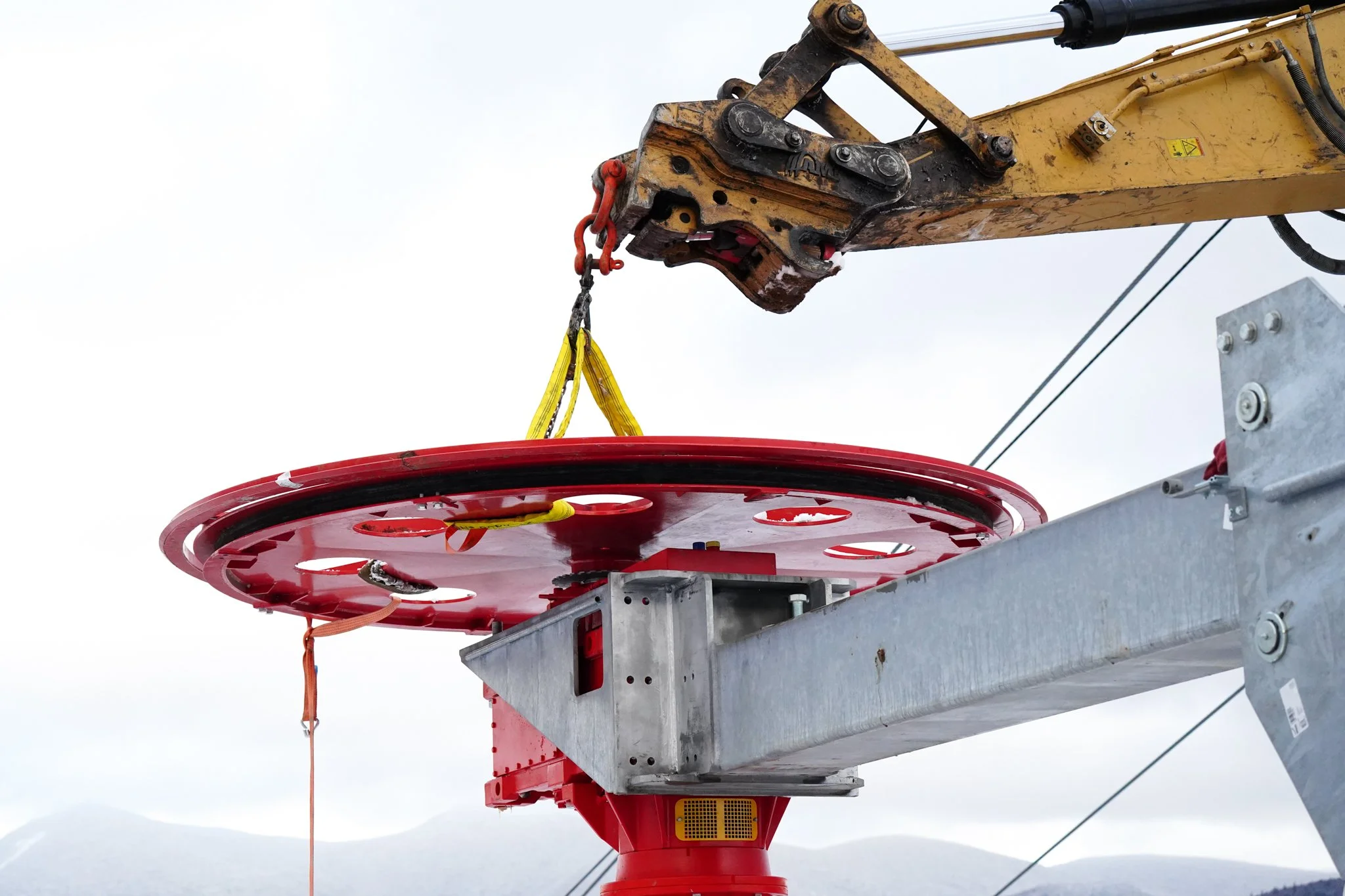
The return bullwheel. Wedged directly in the bottom of the Chute. This story started months and months ago. Sometime in July, our surveyor flagged the locations off all the towers and the two terminals, along with the depths per the engineered profile. Warm, dry, July. And we blasted, and we dug, and we got the foundations dug to elevation. And then, sometime in October, we realized that the surveyor had mistakenly labeled the top of concrete as the bottom of concrete. Yes, folks, we blasted and came up 12 feet short of elevation at the return station. 12 feet of straight ledge. As we stood on Chief's Landing and quadruple checked the measurement, I made a very hard phone call to the blasters, who had just moved all of their drills and blasting mats and equipment off the mountain five days earlier. Colin.... Uh... we need you back up on the Chute. Luckily Colin and his father, Wayne, love this place, love Waterville. Within days, we were drilling and blasting again. But to the right depth this time....
With the blasting done and some 330 excellent rock clearing, the hole was ready for the form. And friends, this was not just a form.... it was a tiny home that could house a family of five. Assembled in the shop parking lot, deconstructed in the shop parking lot, hauled up by Marooka and the lull piece by piece, reconstructed in the hole... the return station was a house-sized puzzle of structural lumber, plywood, rebar and pencil rod. And with all of that built in the rocky hole on the side of a mountain in near-winter conditions, we still had to get concrete there.
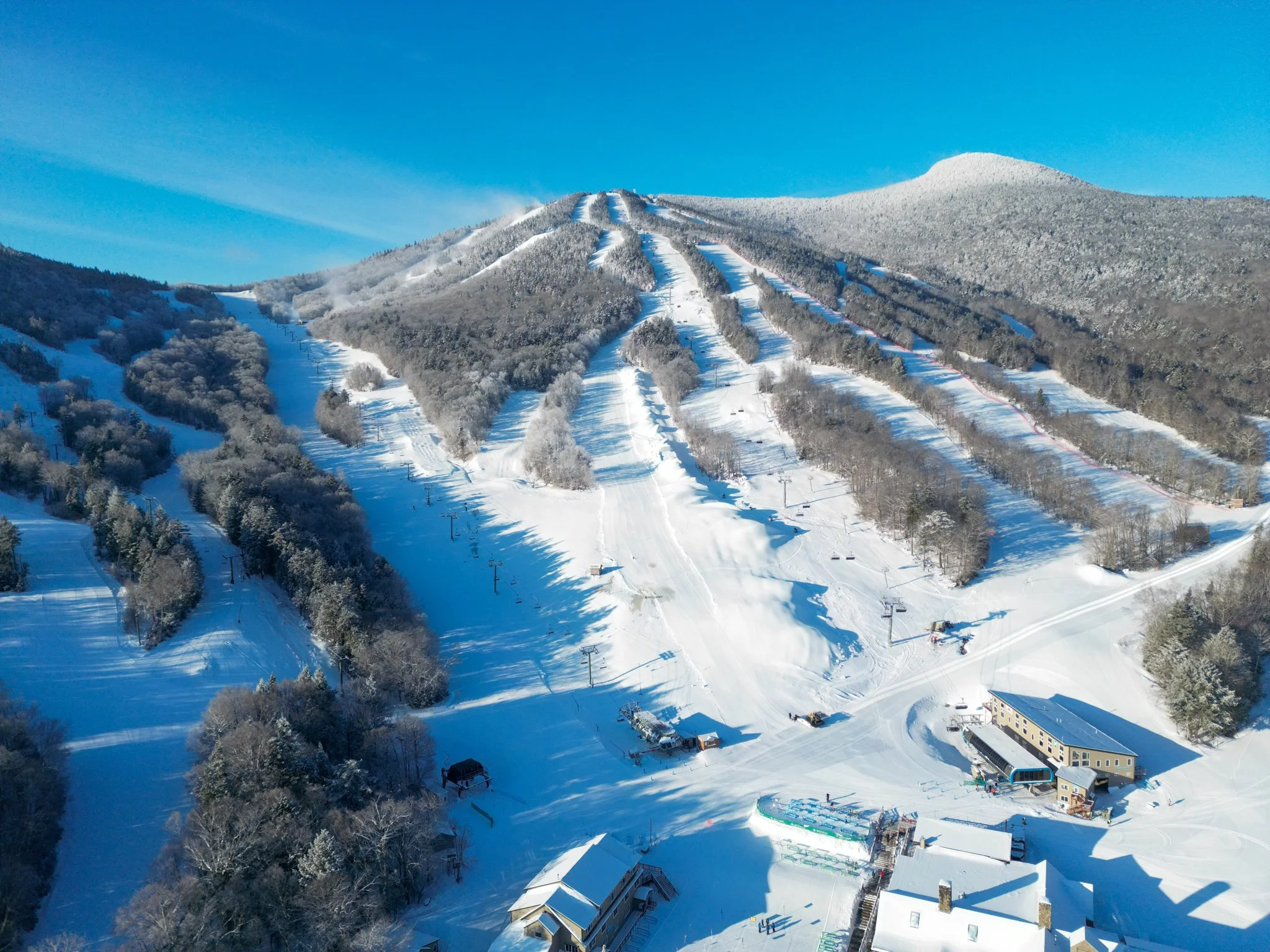
For towers 10 & 11, we were able to get the concrete trucks up to a pad built across from tower 9. For Waterville skiers who know the place, the pad is on skiers left at the very top of Upper Exhibition, 300 feet from the bottom of the Chute. My 13 trips in the Marooka for those towers were a ten-minute lap time. Boy, and I thought concrete was the worst then....
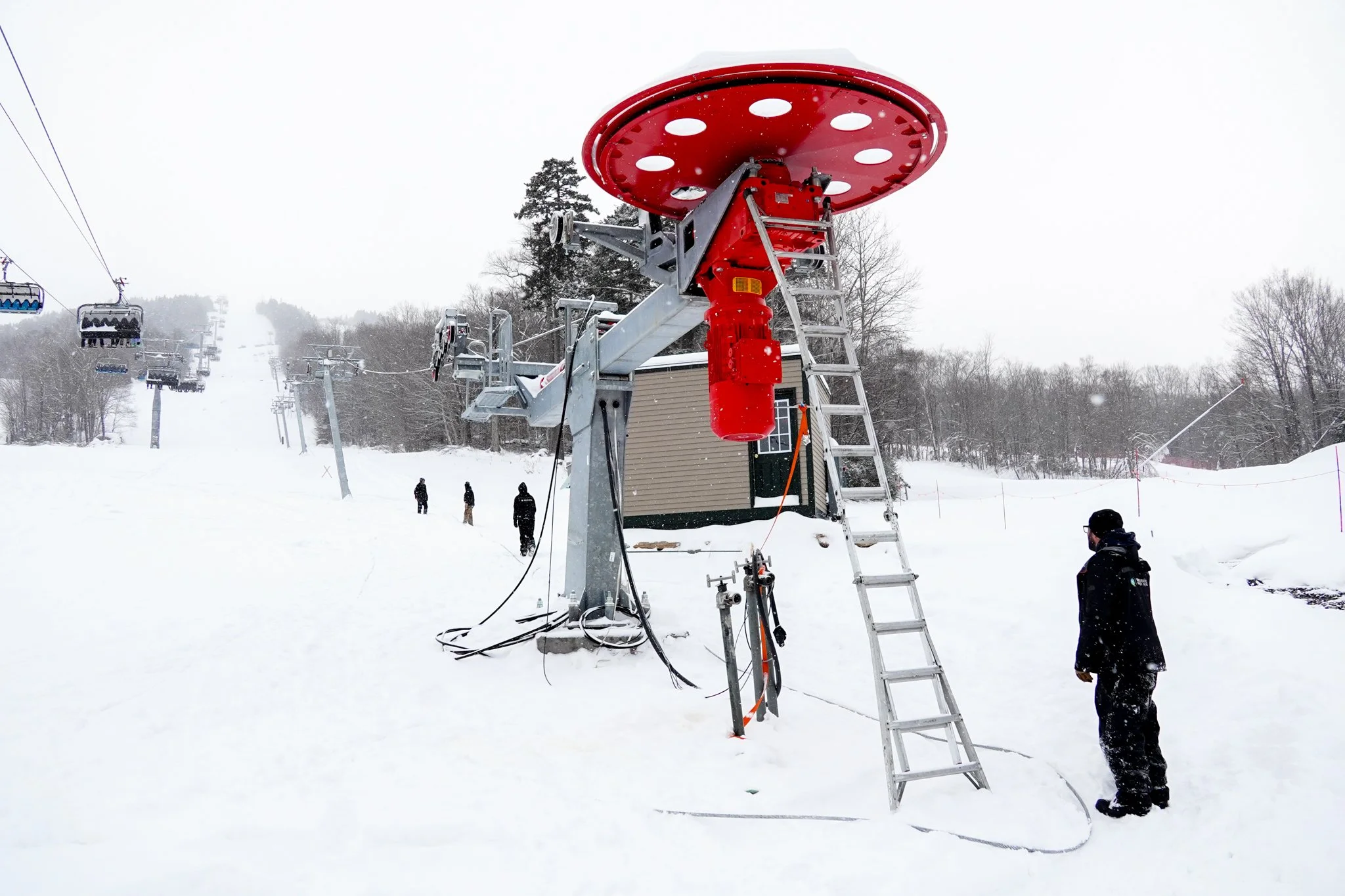
In the icy, mucky, muddy fall weather the day of the return bullwheel pour, the concrete trucks weren't making it five feet up from the bottom of Exhibition. So we had to load Marooka at the BOTTOM of Exhibition, a 23 minute lap time. Oh, and the return bullwheel foundation required 36 yards of concrete and a total of 26 laps in Marooka. By the time that foundation was poured, I had spent 12 hours in the back of that truck, babying my precious concrete in the buckets - willing it not to spill, willing it to stay liquid until it got poured into the forms. I'd say by the end of the 12 hours, we had the process down to a fine dance. And with that last foundation poured, I looked down the line and marveled at what we accomplished as a team with our equipment and our people - 11 tower foundations and two bullwheel foundations all ready for steel. Listen, friends, I know I have said too many times that concrete is the worst, but good lord, I can't wait for the next concrete project, the next lift build, on Green Peak. Me and Marooka will be ready.
Hanging Steel, Pulling Ropes
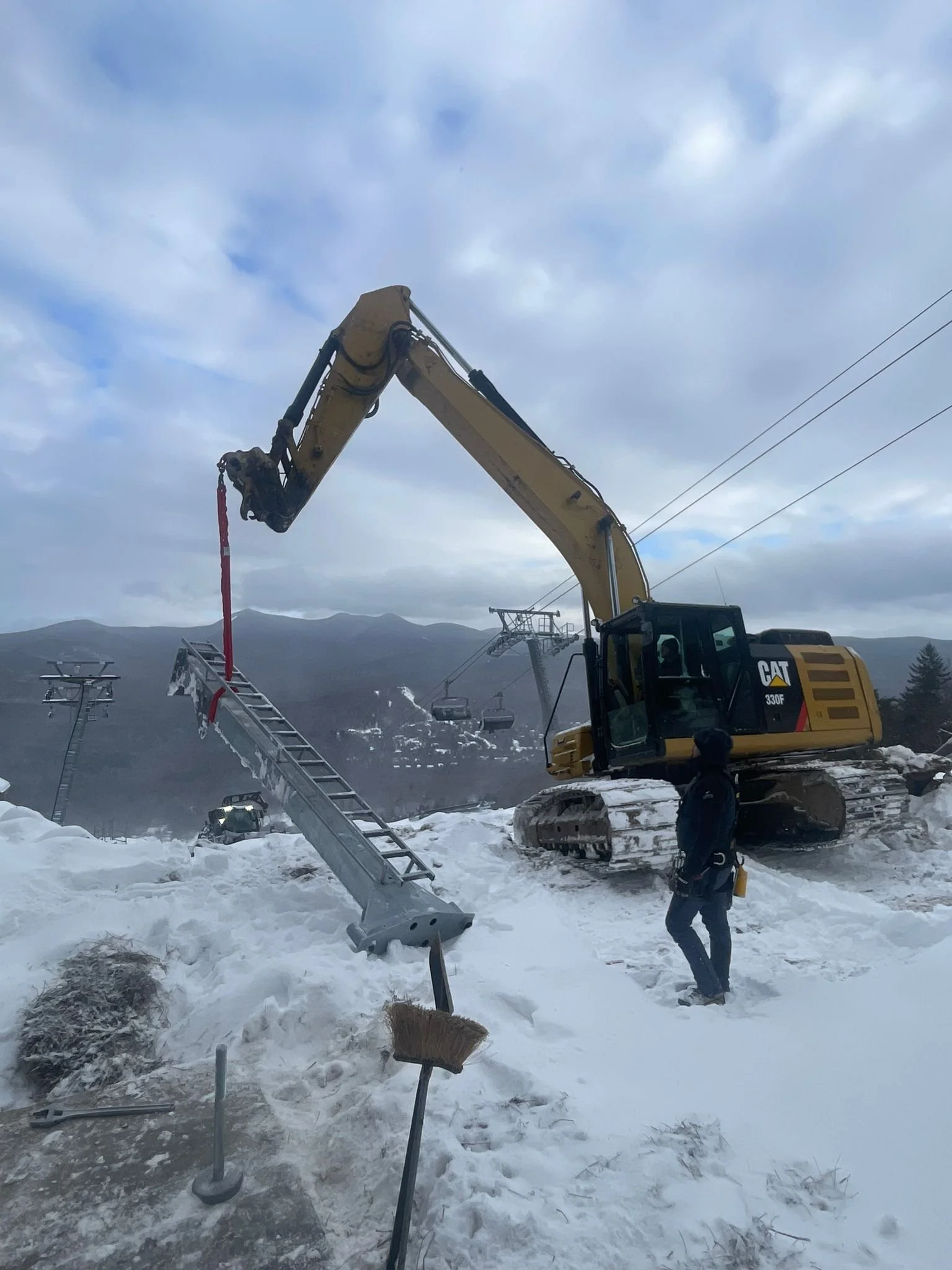
With the concrete firmly in the ground, it was time to set towers and pull the rope around. In the summertime, with a firm work road and no snow, the movement of steel uphill would have been a breeze. However, with an early start to the winter, travel up the construction road became challenging - shifting weather turned the road from mud to ice and back again. Additionally, we had already started early season snowmaking and most of the team we had assembled for summer projects dissipated to their home departments, ready for operating season. With just a small group of us left, we put our heads down and got after it. Towers went up with 330 - boom stretched to the max to set towers and tower heads - 11 towers in total, each location with a challenge of its own. The drive station was a snap - All the parts and pieces in the right place at the right time, on flat-ish ground. No problem. The return station though.... Remember the fun we just had at the bottom of the Chute with concrete? Yeah, even more fun with steel in frigid temps in a location nearly impossible to access - as snow started to fall and snowmaking surrounded us. Parts got buried in snow drifts, ice filled bolt holes, poor 330 was grumpy in the freezing temps - All just challenges, not problems. After two hours of trying to insert the bullwheel axle into the support arm, thinking it was the negative temps constricting the steel, it became abundantly clear that something was wrong with the dimensions of the support arm. This 900lb beam, with plates top and bottom, was 10mm too tall at the plates. 10mm. So, we dragged the return station back down the hill, a walk of shame for that large piece of steel. Depressed but not defeated, we called every machine shop we could think of to find someone who had the right equipment to make such a slight, precise adjustment on a chunk of steel the size of a motorcycle - and luckily our friends at SL Chasse were able to jump us to the front of the line at a shop they use down south. While our support arm took a tour of NH in the back of a truck, we were also struggling with a lost package of lift parts that didn't make it on a plane in France and continued to miss flight after flight - a small duffel bag with critical parts - Delta customer service certainly got tired of hearing from us. With parts found and the support arm reworked, the bullwheel went together like a dream and got set at the top - the last piece of a big steel puzzle, a crowing jewel.
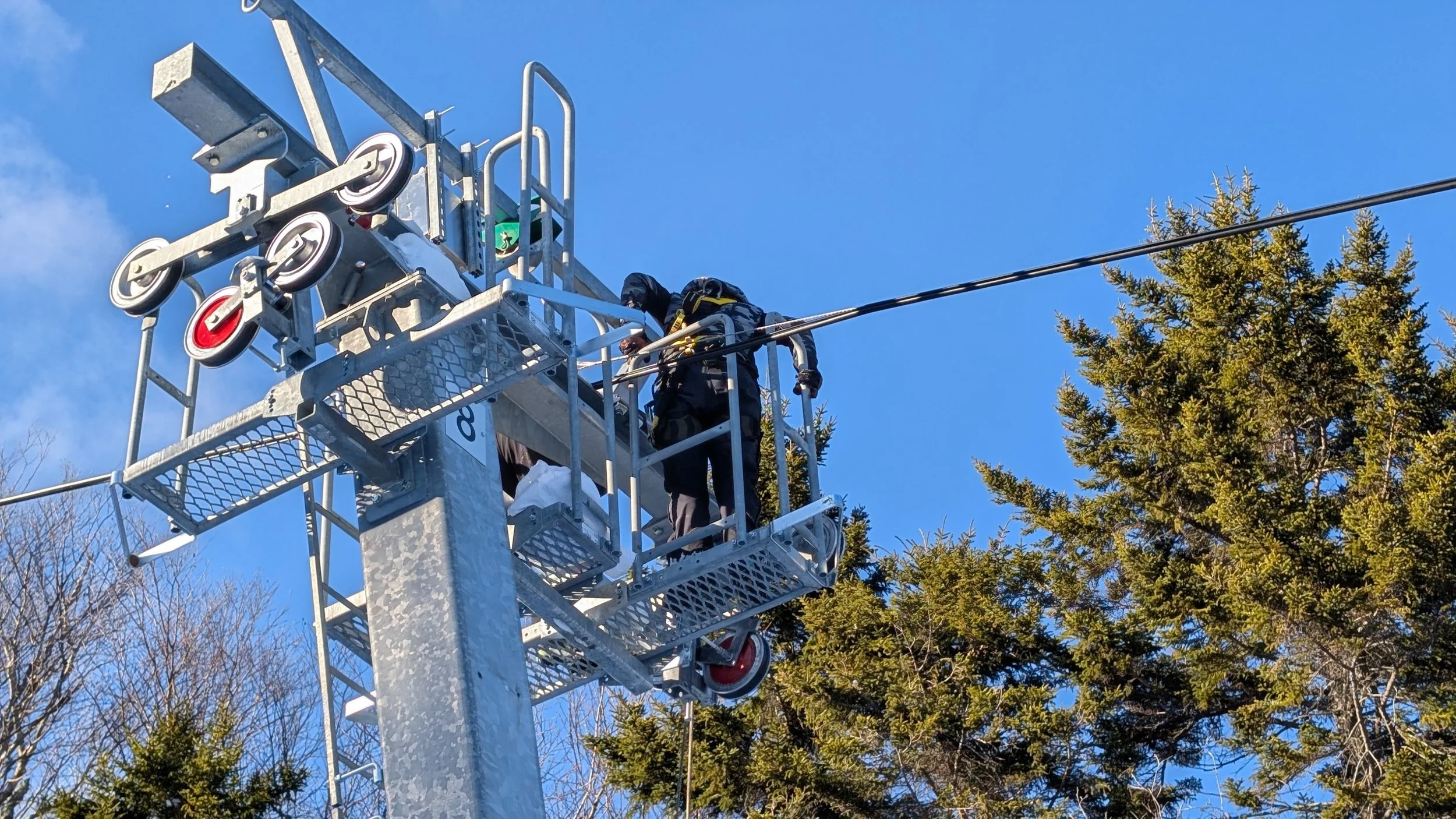
And while I'd like to tell you I breathed a sigh of relief after this, that is not the end of our story. With the steel structure in place, we were now ready to pull the rope. Now the typical way to pull a rope is to pull a sand line first, then you do a construction splice between the sand line and the haul rope and pull the haul rope around the towers in that fashion. Pressed for time and needing to just keep the forward momentum going, we said to hell with it and we pulled the haul rope by hand. If you were at the mountain that chilly Saturday, you might have seen me and my team marching down the hill, rope in hand, getting the first end to the bottom. And if you were lucky enough to be riding TEX that day, you might have also seen the cat with the haul rope spool on the blade, clipped in, going backwards down White Caps to run out the rest of the rope. It was a quick day’s work to get the rope spooled out and on the ground. But the real challenge was getting that rope up on the bullwheels, up the towers and on the sheave trains. Haul ropes aren't exactly light, and it's incredible how much weight tension adds when you are trying to pull that rope twenty feet up in the air by hand. We had a lot of ropes, knots, clevises, pulleys and sheer manpower to get the rope into position. What fun it is to climb the towers and drop the rope onto the sheaves, seeing the free-standing steel now connected by a continuous line. I climbed all the towers that day and both stations - marveling at what we had built, what we could accomplish as a team.
The Alignment from Hell
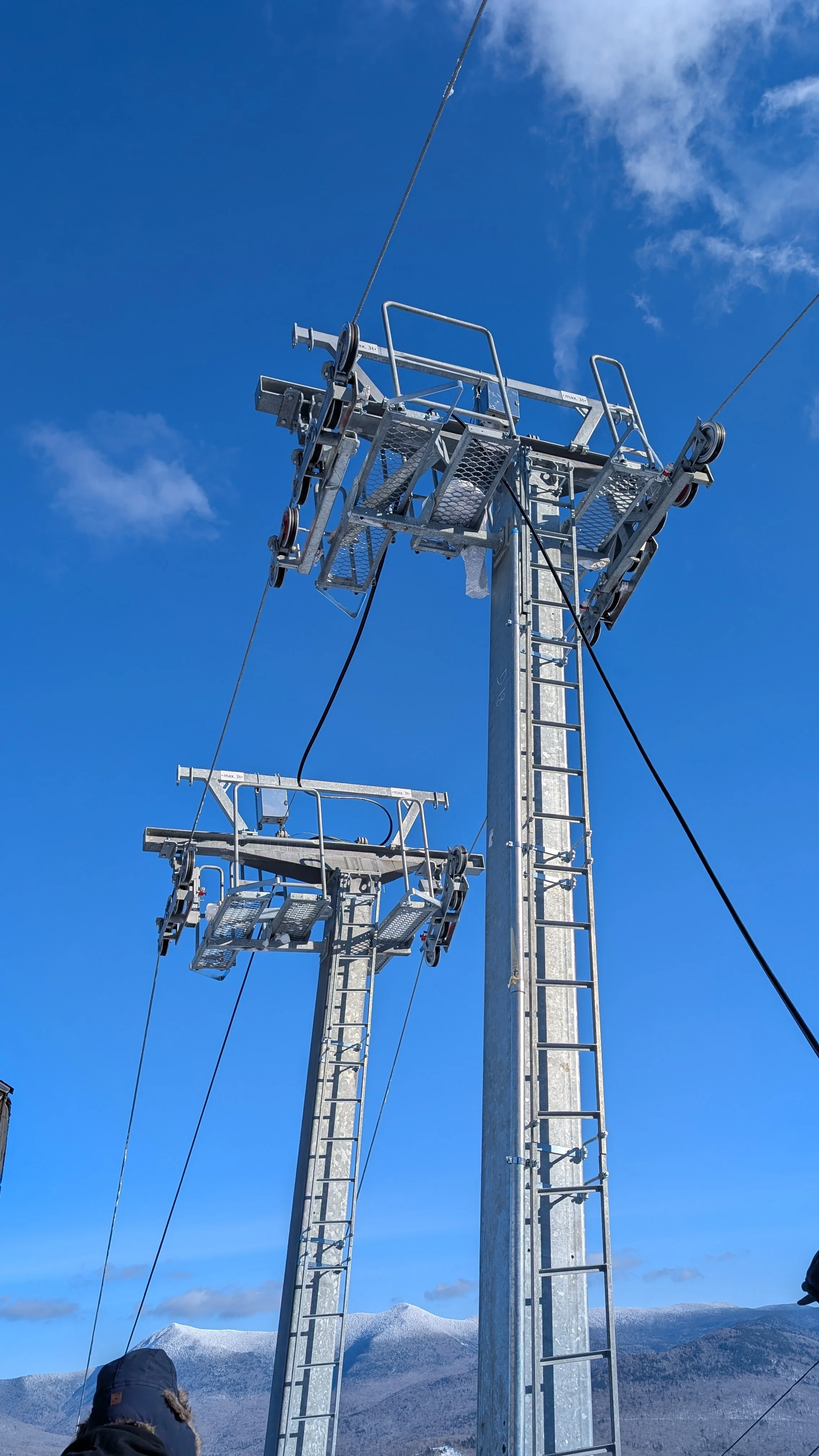
There is nothing more critical to a lift than the alignment – You must be aligned on the X, Y, and Z axis for the engineering of the lift to work properly. Once you’ve picked your alignment on a computer in CAD land, you must then bring that vision to life in the real world, on a real mountain. The alignment starts with the first hole dug – From then on out, you are checking and marking, digging and double checking the alignment, pouring concrete and triple checking, setting towers and quadruple checking – to make sure that you don’t have a tower three feet up the hill too far or 6” to the left or 10” too far in the ground. All these measurements matter to the final installation of the lift. And so as the year progressed, we’ve checked and checked again – to make sure the numbers are good, make sure the trigonometry is right, make sure the lift is in exactly the correct spot. There were moments when we were sure we were dead on – And there were moments when we thought we would be ripping concrete out of the ground. There were times when we reset a tower position ten times and out of frustration, I called it and said, “No – we are leaving it there – alignment be damned." The alignment was the first thing I thought of in the morning and what gave me night terrors when I slept. Once the towers were up and the heads were placed, we finally had a visual check of the alignment. And the visual check… sent everyone into a tailspin… from our MND technicians to those of us who had been a part of the build since Day 1, we all looked up the line and said Holy Crap, that lift is NOT ok. Now, I’m gonna back up here and let you know that we picked an incredibly challenging alignment – beyond the fact that the lift we chose has tilted towers with a 16” offset of the haul rope, we also chose to angle the actual lift alignment to go from middle of Lower White Caps to far skiers left of the Chute – There was a lot of math to math at every foundation to make sure it was correct. And so, friends, you can understand why I was nervous. Consciencely, I knew that visually you would never be able to look up this lift line and see the towers perfectly in a row like you can with Tecumseh, but I certainly thought the chaos of the alignment would make more visual sense than what stood before me. And so we argued, and we panicked, and we did some more math, and in the end, we all agreed – the only way to check the alignment for accuracy was with string – A string never lies. And luckily, a haul rope is the best string a girl could ask for.
So, after the exhilaration of getting the rope in the air, the next day felt like D Day – pulling tension on the rope, finally knowing the truth, answering the question – Are we in alignment? That day our team had dwindled down to just three of us – Wally, Tony, and me. And it felt like a good day to not have the broader team along for the journey – a day of concentration and effort. It took us all day – we watched the sheaves as we pulled the rope taught down the line, worried that it would pop off. At the end of the night, the last task was to pull it tight around the lower bullwheel and take the ratchet straps off that were holding it on. As we pulled on the rope with the cat at a slight angle to get it back up to Tower 1 to be lashed, we got off the guide sheave and the rope flipped off the bottom bullwheel with a freakish force only taught steel can generate- the day’s effort dissipated in the blink of an eye. But that wasn’t a problem – just a challenge at the end of a very long day. We gritted our teeth, re-did our work, got the rope back on the bullwheel and pulled the rope to its final resting place at tower 1, lashed and ready to go for the splice in the morning. Once the rope was spliced, an adventure in and of itself, we unlashed it from towers 1 and 2 and watched as the rope found its final resting place on the sheave trains – perfectly straight, perfectly in place, perfectly aligned. That day, I felt the weight of the world come off my shoulders, a lightness I had not felt all summer – I breathed out for the first time in months. That day, a lift was born.
And for those of you who have been high in the air above me on TEX, watching the progress, you know we are close to opening the lift – exactly one week to go!
Organized Chaos
I write a lot about the T-bar in these Ops Reports. It is the project that takes up quite a bit of my head space. But in reality, my team has undertaken multiple large projects this fall and winter – all while maintaining the daily operations of a ski resort in ski season.
Operating season IS my favorite season to work in the ski industry. There is something about the routine of it that makes me feel both energized and at peace. Every day is near the same – the way we open the lifts, the grooming that happens overnight, friendly patrol voices managing the ebb and flow of the mountain over the radio, the hiss of the snow guns, and the chatter in the lodge. When the day is done and the lifts are all closed and patrol has signed off the air, I sit down and write my internal Ops Report for the next day and send it out to the team – so everyone knows what to expect – another great day in Waterville Valley. Simple, peaceful, routine.
That daily ebb and flow is the absolute OPPOSITE of construction projects. So when you add four major projects on top of operating season, you end up with what I like to call organized chaos – We open the mountain, we close the mountain and what happens in between right now is A LOT of hustle. We have continued to put together our new pipeline on the Chute, Exhibition, and Lower White Caps. We are just about done installing all of our new HKD stick and boom guns for the new T-bar and Exhibition terrain park. We have permanent night lighting almost fully installed. New bubbles continue to go on TEX on a near daily basis. Now couple that with the predictable chaos that comes with ski season – power outages, breaks in snowmaking lines, lift issues and troubleshooting, and at least once a season, a storm will roll through that floods the lodge and wreaks havoc on the trails. Yeah, my team is BUSY.
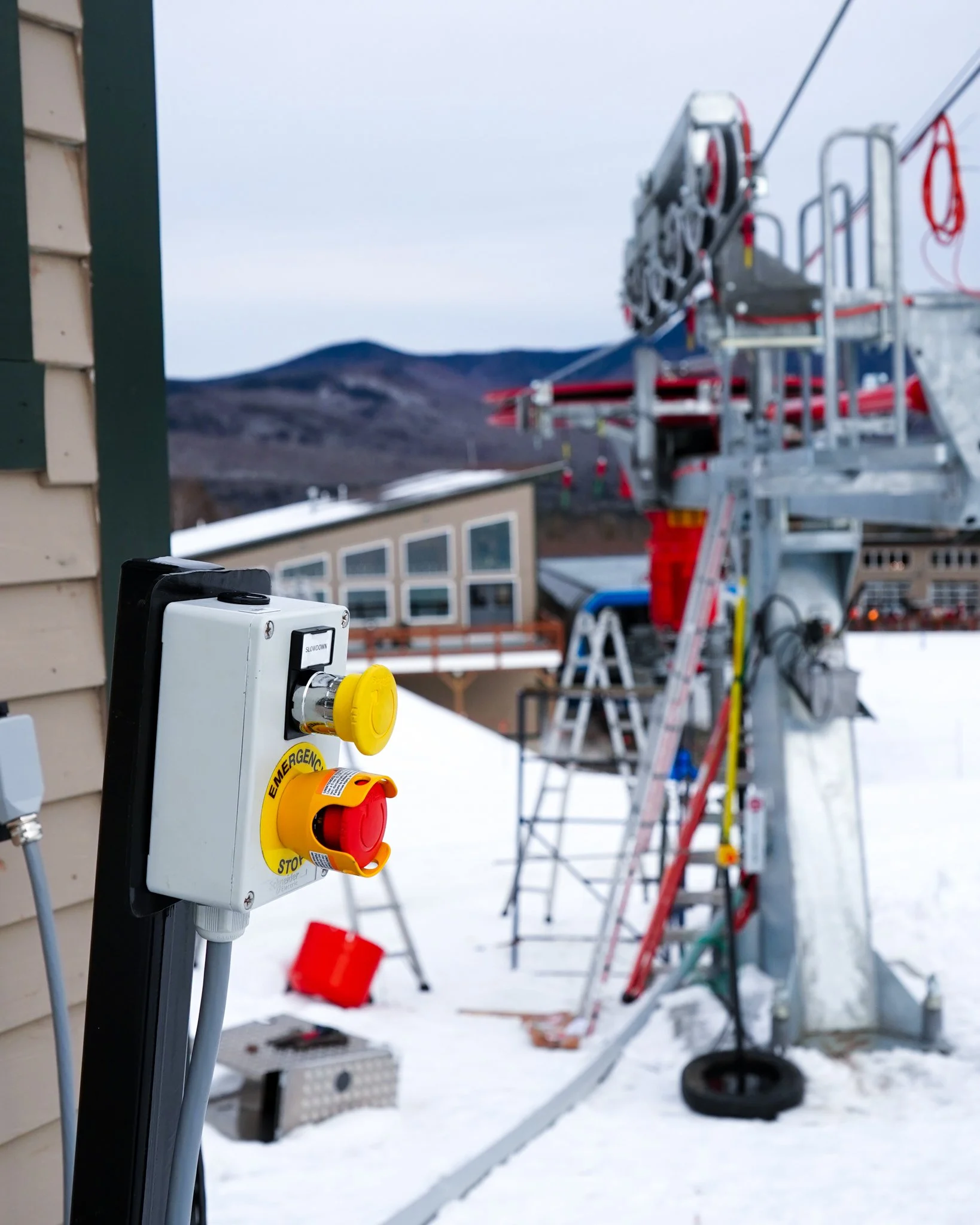
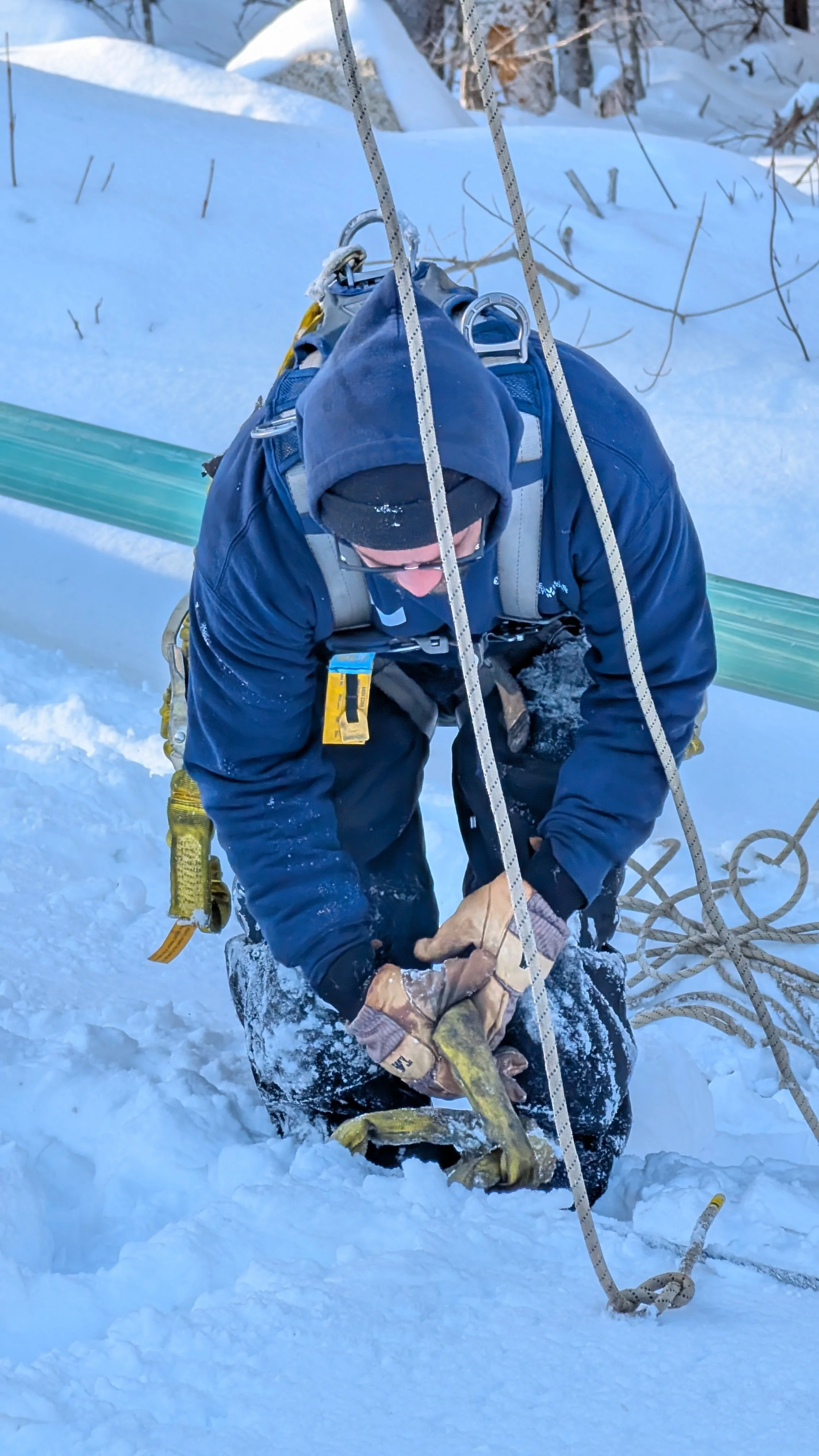
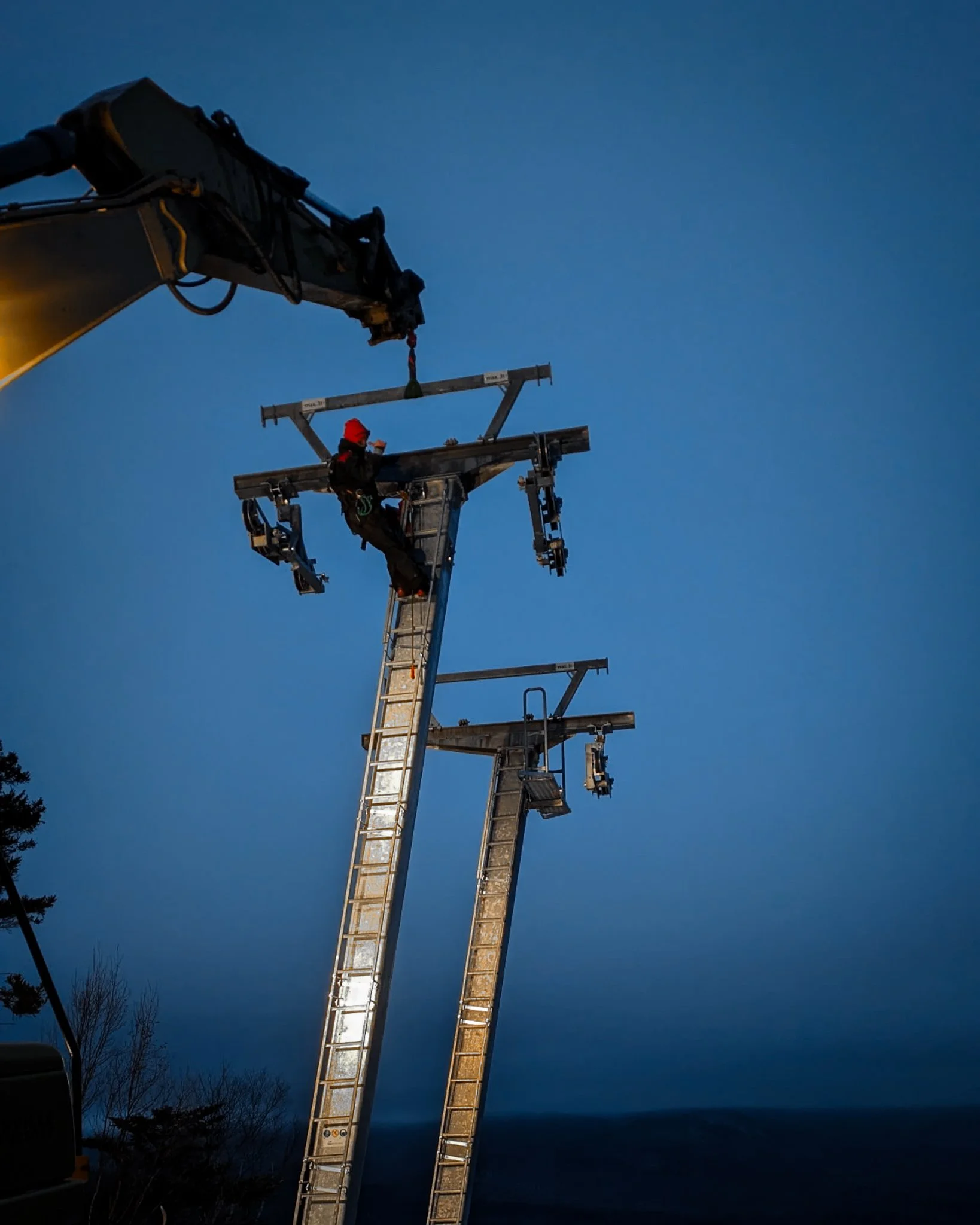
But I see that it is in this chaos that my team thrives. We all live on the edge of crazy – it’s why we are drawn to working in the mountains. Climbing towers in 90kph winds, walking down trails in the dead of night lighting up snow guns, hanging on by a wire off the side of a mountain in a snowcat – we are all here because we are not all there. But it is this crazy that makes the calm of daily operations possible – My team is not just ops, but we are black ops. We are taming the chaos from the shadows of the resort, curating a guest experience in the darkness. So that when that bell rings at TEX, on time, you are greeted with the predictability of daily operations and a peaceful place to relax and enjoy time with your families.
When I stand out on the balcony of my office and I see your familiar faces, enjoying the snow my team has made and the lifts that we are spinning, I am happy. Every struggle we’ve faced and all the hard work we have put in, it was all worth it – Just to see you smile.
M
- Marissa P., Operations Manager